
REVIEW · OLD TOWN HERITAGE WALKS
Pies & Pickaxes: A Historic Walking Tour of Julian, CA
Julian feels like a story you can walk through. This self-guided stroll turns Main Street into a timeline, with historic buildings you can actually see and cemetery hill views that give you quick orientation. I also like how it stays short enough for a morning (about 1 to 2 hours) yet still covers a lot of the town’s big turning points.
I particularly enjoy the mix of everyday places and landmark sites, so you’re not only looking at walls—you’re also eating pie or at least walking past the spots tied to Julian’s switch from mining to orchards. One possible drawback: you’ll want to have a smartphone with you, since it’s built around a mobile app/tour download.
In This Review
- Key points to know before you start
- How the Pies & Pickaxes tour works on Main Street
- Bailey House and Julian Cemetery: the quick start that sets the tone
- Pie and orchards: Julian Pie Company and the mercantile story
- Miner’s Diner and Jack’s Grocery: everyday buildings with real character
- Wilcox Building, the Gold Rush Hotel, and Julian Jail
- The restored schoolhouse and the Julian Pioneer Museum finish
- Price, value, and why $7.99 is actually fair
- Best times to walk, and how to pair it with your day
- Who this walking tour fits best (and who might want something else)
- Should you book Pies & Pickaxes in Julian, CA?
- FAQ
- How long does the Pies & Pickaxes tour take?
- Where does the tour start and end?
- Is the tour self-guided or guided in person?
- Do I need a smartphone?
- What language is the tour offered in?
- Are children included in the pricing?
Key points to know before you start
- A 1 to 2 hour self-guided loop through Julian’s key historic sites on foot
- Pie-and-prank style storytelling that connects people to places, not just dates
- Hilltop views at the Julian Cemetery for a quick panoramic break
- Big names and specific objects (like a wheelbarrow used in 1900 road surveying)
- Ends at the Julian Pioneer Museum at 2811 Washington St, just around the corner from where you start
- Family-friendly timing, with children under 11 free and the walk doable for most visitors
More of Old Town San Diego, tacos and tequila included
- San Diego’s Gaslamp Quarter Historic True Crime Tour
★ 4.5 · 230 reviews - Tequila, Tacos & Tombstones: Old Town Food & Drink Walking Tour
★ 4.5 · 225 reviews - 2-Hour GoCar Tour of Downtown San Diego and Old Town
★ 4.5 · 141 reviews - San Diego Old Town Tales, Tacos and Tequila Small Group Tour
★ 5.0 · 121 reviews - San Diego to Temecula: Wine Country Tour & Historic Old Town
★ 5.0 · 93 reviews
How the Pies & Pickaxes tour works on Main Street
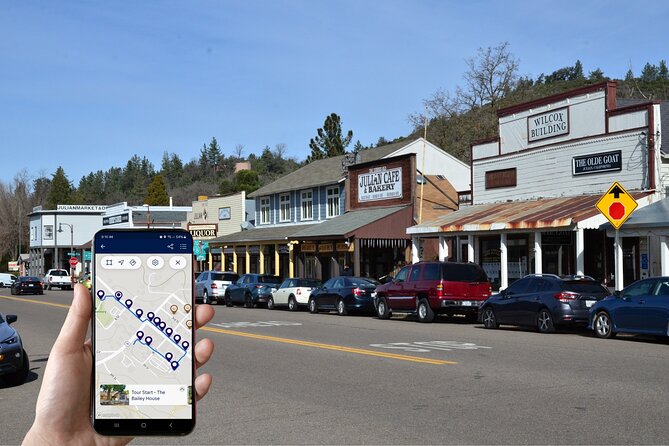
This is a self-guided walking tour, offered in English, that uses a mobile ticket plus an app and downloadable content. Translation: you don’t need to gather with a group at every corner, and you can set your own pace. It’s designed as a practical way to get your bearings in Julian fast—especially helpful if you’re staying in town and want something that doesn’t eat your whole day.
You start at 2315 Main St, Julian, CA 92036 and finish near Julian Museum and Pioneer County Park, 2811 Washington St. The tour ends just around the corner from the starting area, so you’re not stuck wandering for hours and then realizing there’s no easy way back.
Timing-wise, you’re looking at roughly 1 to 2 hours. That matters because Julian’s weather can shift quickly in the mountains. A shorter window helps you plan around cool mornings or warmer afternoons, and it makes it easier to pair the walk with a longer lunch stop afterward.
One more practical note: the tour gives flexible access (unlimited use within 30 days). That’s useful if you want to repeat it, re-listen to parts, or fit it into your schedule when you’re still figuring out what day you’ll have energy for a walk.
Bailey House and Julian Cemetery: the quick start that sets the tone
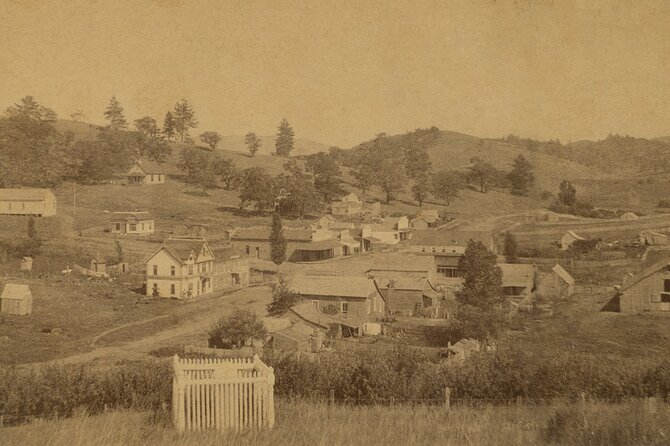
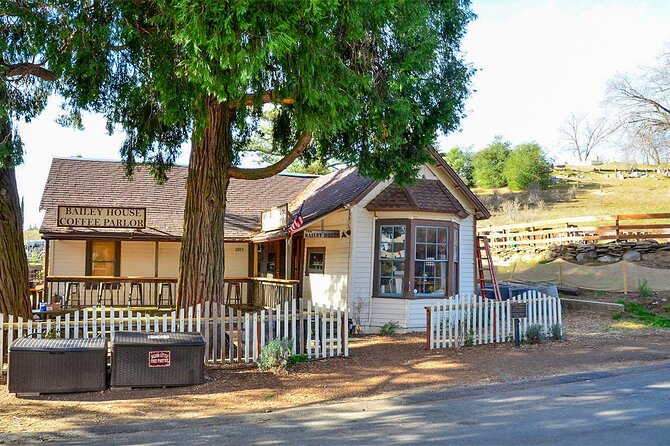
You begin at Bailey House, tied to Drue Bailey, the founder of Julian. Even if you’ve passed by historic buildings before, this first stop is a good “why this town matters” setup. You get a personal story angle—something funny and human—about a prank Drue Bailey pulled in town. It’s the kind of detail that makes a place feel less like a postcard and more like a community.
The next step is Julian Cemetery, where you climb a hill for views over town. This is one of the most practical parts of the route because the walk uphill naturally slows you down and forces you to look. Once you see Julian from above, the rest of your walk makes more sense. Streets and landmarks stop feeling random.
What I like about doing the cemetery early is that it gives you a visual reference point before you sink into the pie, mercantile buildings, and hotel stops later. You’ll know what you’re looking at and where it sits.
A small consideration: cemetery hills mean your feet get the workout. It’s not portrayed as extreme, but if you’re wearing sandals or you’re dealing with limited mobility, plan for uneven ground and take it slow.
Pie and orchards: Julian Pie Company and the mercantile story
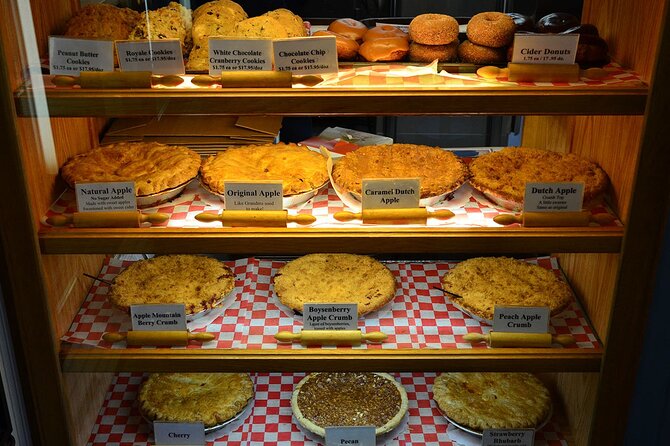
From the cemetery views, the tour flows into a classic Julian rhythm: food breaks and historic context. At Julian Pie Company, you’re not just stopping for dessert—you’re hearing how Julian’s early residents helped shift the town away from mining and toward apple orchards. It’s a smart theme because pies and orchards are such an obvious part of Julian today, yet they also trace back to what people needed to build and survive.
If you want to eat on the walk, this is the place to do it. The tour timing around this stop is short, so you’ll likely want to order quickly if you’re also planning to continue. Even if you skip a full slice, the storytelling here makes it easier to understand why people associate Julian with apples in the first place.
Then you move to Julian Market & Deli, in front of the Jacoby building, where you hear how one early resident made a living in Julian. This part is valuable because it shifts the focus from industries (mining, orchards) to daily work and commerce. You start asking better questions while you’re walking: Who were the customers? What did a shopkeeper need to stock? How did a town like this sustain itself year after year?
If you enjoy history that connects to ordinary life, you’ll feel that here. If you only want grand monuments, you may find the mercantile angle more subtle—but still interesting.
Miner’s Diner and Jack’s Grocery: everyday buildings with real character
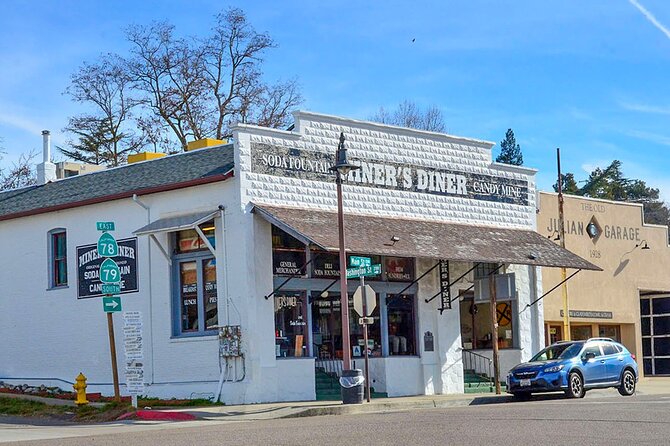
Next comes Miner’s Diner on Julian’s Main Street. This stop is framed around one especially cool fact: it was the first backcountry building to be built of brick. That single detail does a lot of work. It hints that the town was growing up, building more permanently as settlement deepened.
Brick also suggests durability. In mountain towns, that matters. The story you’re given here helps you imagine why certain buildings survived and why others faded. It’s less about a building “looking old” and more about it being old on purpose.
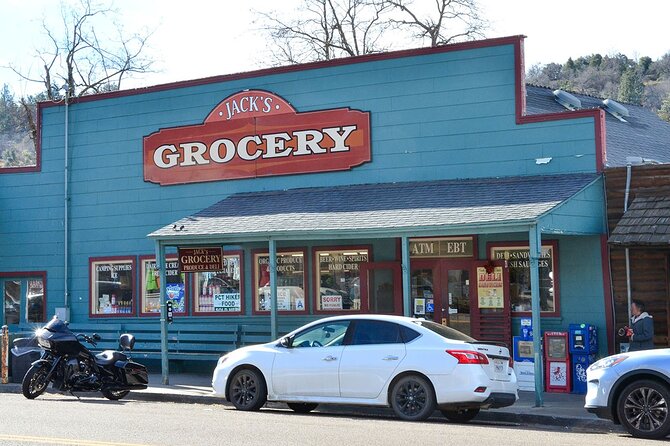
A few steps later you reach Jack’s Grocery, where the focus is an Italian immigrant named Frank De Luca. You hear about how he moved to Julian and started a grocery store. Grocery stories can sound basic, but they’re actually some of the most revealing. A shop like this was tied to supply lines, seasonal rhythms, and how families managed day-to-day.
This is also a good spot for a quick reset. You’re not only collecting facts; you’re reading a town through its services. When you finish, you should be able to picture Julian as a lived-in place, not just an attraction.
If your phone battery is shaky, consider slowing down here and taking in the story. You don’t want to lose connectivity mid-route.
A few more walking tours worth booking around San Diego
- Intro to Mexico Walking Tour: Tijuana Day Trip from San Diego★ 4.5 · 616 reviews
- Tijuana Local Walking Tour from San Diego★ 4.5 · 283 reviews
- Tequila, Tacos & Tombstones: Old Town Food & Drink Walking Tour★ 4.5 · 225 reviews
- San Diego: Gaslamp Quarter Food & Drink Walking Tour★ 4.7 · 154 reviews
Wilcox Building, the Gold Rush Hotel, and Julian Jail
Now the tour shifts into higher drama, while still staying grounded in specific places.
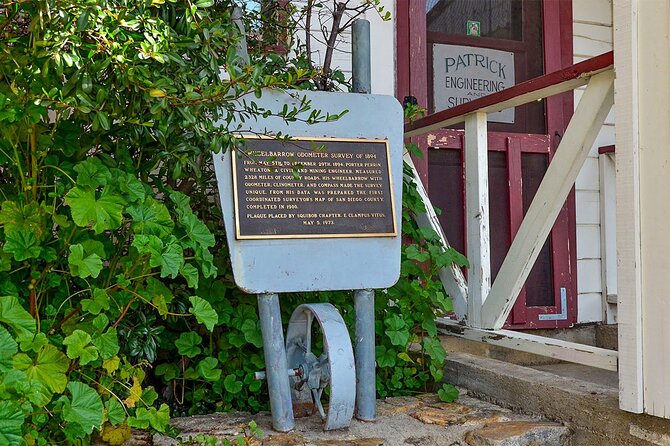
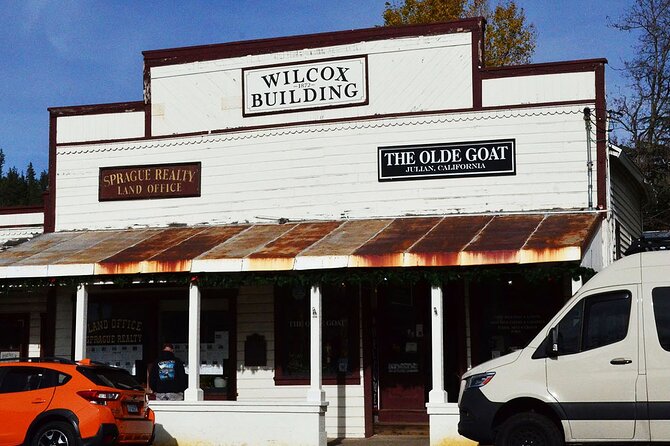
At the Wilcox Building, you’ll see a wheelbarrow used by Porter Perrin Wheaton to survey 2328 miles of county roads in 1900. That’s an extraordinary detail because it turns a small object into a big county-scale story. Instead of thinking of roads as background, you realize people literally measured and built the ways others would later travel.
Next is the Julian Gold Rush Hotel. This is described as the oldest continually-operating hotel in Southern California, and you hear about Albert Robinson, an ex-Missouri slave, and his wife Margaret, who started the hotel. If you’re drawn to history that doesn’t shy away from human complexity, this stop hits hard in a good way. The hotel isn’t just a place to stay; it’s a witness.
Finally, you reach Julian Jail, a small concrete jailhouse that replaced a smaller wooden jail that detainees kept escaping from. That detail makes the building feel practical and specific. It’s also a reminder that law, order, and infrastructure change over time in response to what’s happening on the ground.
Two things to keep in mind here:
- This section is where you’ll likely want to pause and read carefully, because the names and specifics are strong.
- If you’re sensitive to heavier topics, the jail and the hotel backstory are the points to note. The tour keeps it factual, but the subject matter is real.
The restored schoolhouse and the Julian Pioneer Museum finish
The tour wraps up with an old schoolhouse that was relocated and restored by the Julian Historical Society. A restored schoolhouse usually works best as a “how people learned” snapshot, and in Julian it reinforces the idea that the town built institutions, not just businesses.
Then you end at the Julian Pioneer Museum at 2811 Washington St. The museum showcases artifacts and exhibits that reflect the town’s early residents and their life in Julian. Since this is the final stop, it’s a great moment to slow down. If you’ve been moving quickly to keep the pacing, the museum ending gives you a place to linger a bit.
If you’re deciding whether to add time for the museum, I recommend you do it if you’re even moderately curious about how the town evolved. The walking tour sets the stage; the museum helps you fill in the “what did it look like inside?” blanks.
Price, value, and why $7.99 is actually fair
At $7.99 per person, this tour is priced like a practical add-on rather than a big-ticket attraction. That matters because the value comes from focus: you’re not paying for a long day of transportation or a huge museum entry fee baked into one price. Instead, you’re paying for a guided-style experience that helps you notice and connect the dots while you walk.
Also, the tour includes an app/tour download with pre-downloadable content so you can save data. And the access window is generous, with unlimited use within 30 days. That turns your purchase into something you can revisit if your schedule shifts or if you want to re-walk parts when you have energy.
One more value point: it’s private for your group, and children under 11 are free. For families, that can make this one of the cheaper ways to do a structured activity in town without waiting for a big group or paying adult rates for kids.
Best times to walk, and how to pair it with your day
The tour is available during Monday through Sunday, 5:30 AM to 9:00 PM. That wide window gives you flexibility. If you like cooler air and good light for photos, consider an early start. If you prefer to keep the day relaxed, you can fit it later and then use the museum ending when you’re ready to sit.
Because the route is outdoors (and includes a hill at the cemetery), you’ll want to dress for mountain conditions. Even when the weather looks fine at your car, bring layers just in case. And because the tour is short, you’ll do less “lost time” if the weather turns.
Pairing ideas that make sense:
- Walk first, then eat. The pie and market stops work best when you’re hungry.
- Museum after the walk. If you hit the museum first, you can miss some of the story threads that the walk sets up.
- Use the loop as a warm-up. It’s a solid way to start your time in Julian before you branch out to other stops.
Who this walking tour fits best (and who might want something else)
You’ll likely love this tour if you:
- Want a short, structured way to understand Julian without committing to a half-day
- Appreciate history that includes everyday work (shops, grocery stores) and not only famous buildings
- Like a route where the views are built in, especially from the cemetery hill
It may be less ideal if you:
- Don’t want to use a smartphone during the experience
- Prefer large, indoor attractions with long time on site
- Have trouble with hills or uneven walking paths
On the other hand, the tour is described as suitable for most travelers, and service animals are allowed. So for many people, it’s a straightforward “get oriented and feel connected to the town” activity.
Should you book Pies & Pickaxes in Julian, CA?
If you’re staying in Julian and want an easy win—something that helps you notice the places you see every day—this is a smart pick. The storytelling focus on real people (Drue Bailey, Frank De Luca, Albert Robinson and Margaret) plus specific objects (like the Wilcox wheelbarrow tied to road surveying) makes the town feel more legible as you walk.
I’d book it if you value:
- A short morning-to-lunch plan that doesn’t require transportation planning
- Clear stops with built-in context
- A finish at the museum so your day ends with something you can linger in
I’d skip it if you’re already deep into Julian history and want something longer and more expansive than a compact 1 to 2 hour walk. But if you’re like most visitors—curious, hungry, and trying to make the most of limited time—this one is a very good bet.
FAQ
How long does the Pies & Pickaxes tour take?
The experience runs about 1 to 2 hours.
Where does the tour start and end?
It starts at 2315 Main St, Julian, CA 92036 and ends at Julian Museum and Pioneer County Park, 2811 Washington St, Julian, CA 92036.
Is the tour self-guided or guided in person?
It uses a mobile ticket and an app/tour download, so you experience it on your own pace rather than as a group led by a person.
Do I need a smartphone?
Yes. A smartphone is listed as not included, and the tour uses a mobile app/tour download.
What language is the tour offered in?
The tour is offered in English.
Are children included in the pricing?
Children under 11 are free.
More San Diego Walking Tours to Book


Back Through Old Town San Diego
Just added: fresh San Diego tours worth a scroll





Old Town Heritage Walks, compared.
 ★ 4.5San Diego’s Gaslamp Quarter Historic True Crime TourFrom $29230 reviews
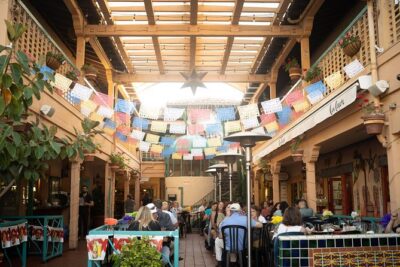 ★ 4.5Tequila, Tacos & Tombstones: Old Town Food & Drink Walking TourFrom $94225 reviews
 ★ 4.52-Hour GoCar Tour of Downtown San Diego and Old TownFrom $52141 reviews
 ★ 5.0Historic La Jolla Walking TourFrom $70124 reviews
 ★ 5.0San Diego Old Town Tales, Tacos and Tequila Small Group TourFrom $85121 reviews
 ★ 5.0San Diego to Temecula: Wine Country Tour & Historic Old TownFrom $25893 reviews
 ★ 5.0San Diego Coronado History and Highlights Small Group TourFrom $6472 reviews
 ★ 4.8Old Town Tequila and Tacos Walking Food TourFrom $8971 reviews
Browse the lists this tour appears in