
REVIEW · SAN DIEGO ZOO & SAFARI PARK
San Diego Zoo Safari Park 1-Day Pass: Any Day Ticket
Safari days feel like real travel.
This one-day pass is a practical way to explore a 1,800-acre wildlife reserve at your own pace, with two big wins built in: the walking trails for close animal viewing and unlimited Africa Tram rides once you’re inside. The main thing to plan around is that the park is huge, so you’ll be on your feet a lot—and some animals can be harder to spot depending on where they’re spending the day.
I like that the entry is simple: it’s a mobile ticket that gets you straight to the turnstiles, with no Will Call detour. Once you’re in, you can choose how much tram time versus on-foot time you want, and staff support is a real part of the experience—people even call out guides like Delaney for friendly, clear animal talk.
At $78 per person, the value comes from what’s included: admission, all animal exhibits and shows, and the Africa Tram rides. Food and parking cost extra, and some extra experiences (like certain rides/expeditions) can add fees, so plan on a bit of budgeting beyond the ticket.
In This Review
- Key Things I’d Plan for First
- Getting In: Mobile Ticket, Direct Entry, and San Diego Safari Hours
- Walking Safari vs. Tram Time: How to Build Your Perfect Route
- Africa Tram: The Included 30 Minutes You’ll Actually Use
- Africa Exhibit Highlights: Lions, Giraffes, Rhinos, and More
- Walkabout Australia and Beyond: When the Park Feels Like Multiple Worlds
- Nairobi Village Breaks: Food, Shopping, and a Reset Point
- Optional Expeditions With Extra Fees: When It’s Worth Paying More
- Crowds, Heat, Signage, and Construction: The Stuff That Changes Your Day
- Mobility and Family-Friendly Options: Strollers, E-Carts, and Scooter Rentals
- Price and Value: What You’re Paying For (and What Costs Extra)
- Where This Pass Fits Best (And Who Might Want Something Else)
- Should You Book This 1-Day Pass?
- FAQ
- FAQ
- How do I redeem my San Diego Safari Park ticket?
- What’s included with the 1-day pass?
- How long is the experience?
- What are the park hours?
- Where is the San Diego Zoo Safari Park located?
- Is parking free?
- Is food included?
- Can I bring my own snacks or food?
- Are extra experiences included (like some safari expeditions)?
- What’s the cancellation window for a full refund?
Key Things I’d Plan for First
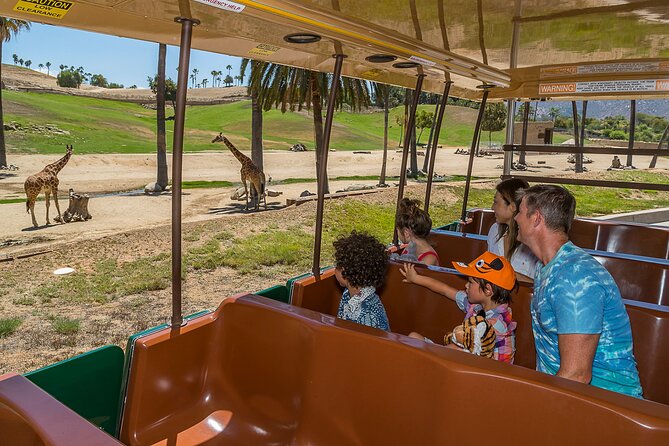
- Unlimited Africa Tram is included, and it’s your best “reset” when your legs start arguing.
- Open-field habitats mean you’ll spend more time watching animals in the landscape than in tight cages.
- Expect a lot of walking. Even with carts/scooters, it’s a big park.
- Animal visibility varies. Some species may be asleep, tucked away, or simply not positioned for great viewing at that moment.
- Bring snacks and water if you’re picky. On-site food is available, but it can feel pricey and a la carte.
- Signage can be confusing. Give yourself time and be okay with a little routing trial-and-error.
More days at the San Diego Zoo and Safari Park
- San Diego Zoo 1-Day Pass: Any Day Ticket
★ 4.5 · 4,248 reviews - San Diego Zoo Admission Ticket
★ 4.7 · 1,332 reviews - San Diego Zoo: 1-Day Admission Ticket
★ 4.6 · 1,150 reviews - San Diego Zoo and Safari Park 2-Visit Pass Ticket
★ 4.5 · 167 reviews - San Diego Zoo and Safari Park 2-Day Entry Ticket
★ 4.5 · 85 reviews
Getting In: Mobile Ticket, Direct Entry, and San Diego Safari Hours
Your day starts when you scan your mobile ticket right at the park turnstiles. There’s no ticket exchange step, which matters when you’re trying to maximize daylight and keep stress low.
The Safari Park runs 9:00 AM to 6:00 PM every day. That’s a wide window for a “pick your own pace” style day. I’d aim to arrive earlier rather than later, not because animals are magically more active at a specific hour, but because you’ll simply have more chances to catch everyone on their schedule.
If you’re coming from downtown San Diego, plan on about 40 miles to get there. Also note the park address is 15500 San Pasqual Valley Rd, Escondido, CA 92027, so plug that in early and don’t rely on last-minute phone searching.
Walking Safari vs. Tram Time: How to Build Your Perfect Route
This is a self-paced day in an 1,800-acre reserve with trails, overlooks, and big habitat spaces. What that means for you: your “itinerary” is really a rhythm. You’ll do bursts of walking, then use tram or breaks to catch your breath and re-orient.
I love the fact that the park is designed for viewing. You’re not just walking past enclosures—you’re moving through areas where animals are in the same world you’re standing in (or at least very close to it, depending on the exhibit). Expect moments where you pause because you’re suddenly looking at something big and real—like giraffes out with gazelles or rhinos gathering at a watering hole.
The tradeoff is distance. Reviews and practical experience point to the same theme: this is not a light stroll. Even if you rent help (more on that below), you should plan for moderate effort and bring a comfortable plan for where you’ll stop and regroup.
Africa Tram: The Included 30 Minutes You’ll Actually Use
The Africa Tram is included with your pass, and that’s a big reason this ticket feels worth it. You can also ride it multiple times—unlimited—and that flexibility matters on a long park day.
A tram loop takes about 30 minutes and carries you past herds and habitats such as elephants and zebras, plus endangered species you’ll want to see without spending energy on every single trail connector. If you’re visiting with kids, seniors, or anyone who gets tired fast, the tram becomes your “anchor” experience.
Here’s my practical advice: don’t treat tram time as optional. Use it to (1) cover ground, (2) return to key zones, and (3) help you decide what you want to hunt for on foot next.
Also consider this reality: lines can happen. If you hit tram rush hours, be ready to wait or shift your day order so you’re not stuck waiting during your most comfortable walking window.
Africa Exhibit Highlights: Lions, Giraffes, Rhinos, and More
You’ll find trails and overlooks where you can observe animals in themed areas. One reason this park works so well is that it nudges you to slow down and look from different angles.
In the Africa zones, you’ll spend time with scenes like:
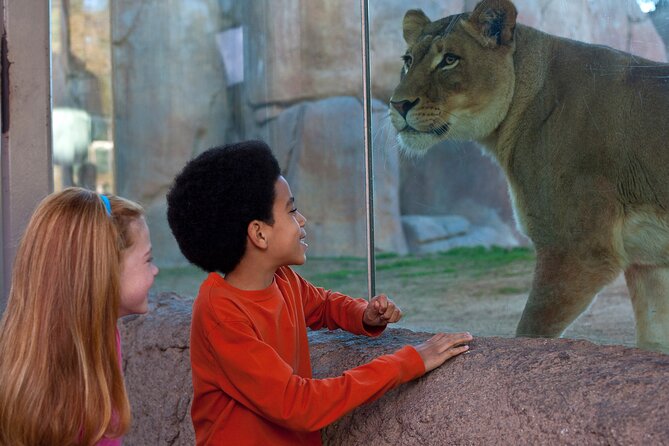
- Lions and tigers in their areas of the park (you may find them at rest rather than performing)
- Giraffes mixing near gazelles
- Rhinos around a watering hole
- South African cheetahs lounging on sunny ground
- The California condor as a major highlight for endangered species
If you’re hoping for constant action, temper the expectation. Wildlife rarely puts on a show schedule for our convenience. Some animals will be active; some will be resting; some will be positioned where you need the right overlook to see them well.
One more thing I’d watch: exhibit access can vary day to day. Some days have construction or viewing-area changes, and those can affect how easy certain animals are to see. If elephants are a top reason you’re coming, build in extra time and be ready for viewing to be less straightforward than expected.
Other tickets we have tried across San Diego
- LEGOLAND® California Theme Park Admission Tickets★ 4.5 · 1,996 reviews
- Maritime Museum of San Diego Admission Ticket★ 4.5 · 98 reviews
- San Diego Explorer Pass: Tickets to 2-7 Attractions★ 4.4 · 80 reviews
- San Diego: San Diego Natural History Museum Ticket★ 4.7 · 33 reviews
Walkabout Australia and Beyond: When the Park Feels Like Multiple Worlds
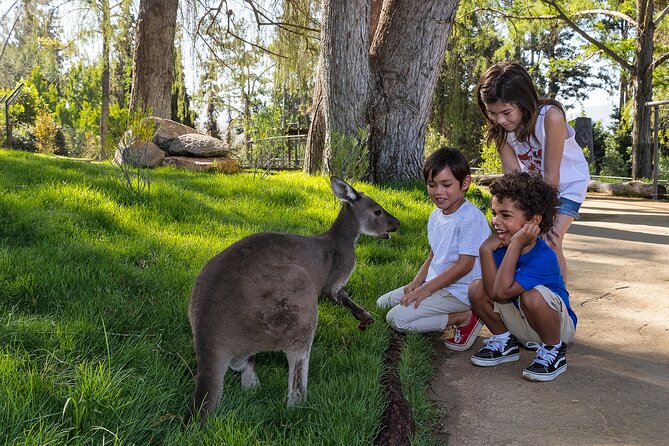
Outside Africa, the park keeps its theme variety. A great example is Walkabout Australia, where you can stroll among kangaroos. This kind of “regional” layout keeps your brain awake, and it helps you move through the park without feeling like you’re doing one long sameness loop.
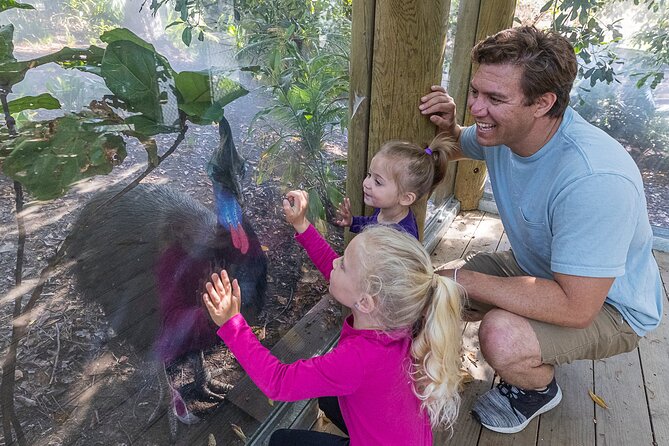
The experience also includes birds and smaller moments that are easy to miss if you only chase the headline species. You might spot storks, crowned cranes, and other birds roaming through their spaces.
And don’t overlook the botanical side of the park. It’s not only about animals—it’s about the environment around them. Even when animal visibility dips, the park still gives you something to look at: plants, open savanna-style views, and the way habitats are arranged for viewing.
Nairobi Village Breaks: Food, Shopping, and a Reset Point
After a stretch of trails, plan on using Nairobi Village as your reset zone. It’s where you can find dining and shopping options so you’re not forced to keep walking just to find something to drink.
Food isn’t included in the ticket. Many people find that the best strategy is simple: either accept that park meals are part of the budget, or bring your own smart extras. The park allows guests to bring their own food in small containers—but not coolers, glass containers, alcohol, or party trays.
My rule of thumb: if you’re the type who gets grumpy without a snack, pack a few healthy items and keep moving. You’ll enjoy the day more when you’re not negotiating hunger.
Also, bathrooms matter on a day this long. People talk about the restrooms in positive terms, including that they’re clean and spacious—so plan a quick bathroom check before you head into a longer trail section.
Optional Expeditions With Extra Fees: When It’s Worth Paying More
Your pass covers admission, animal exhibits and shows, and Africa Tram rides. But the park also offers additional safari-style options. Some of these include tram variations, wildlife safari trucks, electric carts, zip line experiences, and more—and additional fees apply for those special rides.
This is where you decide what kind of day you want:
- If you’re happy with animals + trails + tram: you might not need any add-ons.
- If you want a guide-style push and a more “experience package” feeling: one paid add-on could be worth it, especially for families or first-timers.
Also, keep an eye on the lines and timing. If an optional attraction is popular and you’re already tired, it may steal time from the animal exhibits that you can access with no extra cost.
Crowds, Heat, Signage, and Construction: The Stuff That Changes Your Day
Even in a well-run park, day conditions can shape what you actually see. Heat can reduce animal activity, and open spaces mean you’ll feel the sun. Bring water and protect yourself.
Signage is another practical concern. You can absolutely find your way, but some areas can use better directional clarity—so give yourself buffer time. I’d also recommend using a simple plan: pick one “must-see” zone, do it early, then let tram and trails guide the rest.
Construction can also affect viewing—particularly for major animal enclosures if viewing areas shift. If your top priority is a specific species, don’t assume every viewing platform will be open in the way you’re picturing. Build a little flexibility into the day.
Mobility and Family-Friendly Options: Strollers, E-Carts, and Scooter Rentals
This park is big enough that mobility support matters. There’s stroller and cart culture inside, and you may be able to rent e carts and strollers (and electric scooters are available for rent as well).
If you’re traveling with mobility needs, it helps to know:
- The park has special parking and access for guests with disabilities.
- Wheelchairs and electric scooters are available for a nominal fee.
- You typically need a valid driver’s license or a Safari Park global membership card to rent those mobility tools.
If you want to tour with less fatigue, consider renting a scooter. People have had great experiences doing exactly that, especially on longer days with seniors or mixed-age groups.
One warning: the park does require moderate physical fitness. Even with rentals, you’ll still be moving and walking between stops.
Price and Value: What You’re Paying For (and What Costs Extra)
At $78 per person, you’re paying for a lot of base value:
- Admission to the San Diego Zoo Safari Park
- All animal exhibits and shows
- Unlimited Africa Tram rides
So the ticket isn’t “just entry.” It’s the core pass plus a major included transport option.
What you should budget for separately:
- Parking (the lot is privately owned and has a fee)
- Food and drink
- Special ticketed experiences and events (not included)
- Any additional-fee safari expeditions beyond the Africa Tram
My honest take: this is a good value if you use the Africa Tram and pace your day to cover multiple exhibit zones. It’s less of a bargain if you walk a lot but don’t plan tram breaks, or if you expected constant close-up animal action without waiting for the right viewing moment.
Where This Pass Fits Best (And Who Might Want Something Else)
This one-day pass fits best if you:
- Want a self-paced wildlife day with big habitat viewing rather than short, stop-and-photo exhibits
- Plan to use the Africa Tram and also enjoy walking trails
- Like learning in the field, where guides and staff can help you make sense of what you’re seeing
You might consider adjusting expectations or planning extra time if:
- You’re coming mainly for one specific animal and it’s a top priority (viewing can vary by day and viewing-area access)
- You hate waiting in lines (tram lines can happen)
- You want minimal walking (this park is spread out)
Should You Book This 1-Day Pass?
Yes, I’d book it if you want a classic San Diego-area wildlife day that feels like a real safari circuit. The key is using what’s included: the admission plus all exhibits, and especially unlimited Africa Tram as your backbone.
Before you go, do two things: pack water/snacks if you can, and be ready to walk. If you do that, you’re set up for the best kind of day here—one where the park’s size works in your favor instead of exhausting you.
FAQ
FAQ
How do I redeem my San Diego Safari Park ticket?
Take your ticket directly to the turnstiles for admission. It’s a direct entry ticket, with no Will Call exchange needed.
What’s included with the 1-day pass?
Admission to the Safari Park, all animal exhibits and shows, and unlimited rides on the Africa Tram.
How long is the experience?
It’s listed as 2 to 8 hours (approx.).
What are the park hours?
The park is open 9:00 AM to 6:00 PM, Monday through Sunday.
Where is the San Diego Zoo Safari Park located?
15500 San Pasqual Valley Rd, Escondido, CA 92027.
Is parking free?
No. Parking is privately owned and has a fee (the amount can change). Payment can be made by credit/debit card or cash.
Is food included?
No. Food and drink aren’t included with the ticket, but dining options are available inside the park.
Can I bring my own snacks or food?
Yes, you can bring your own food in small containers. You can’t bring coolers, glass containers, alcohol, party trays, birthday cakes, or decorations. The park also doesn’t offer food storage.
Are extra experiences included (like some safari expeditions)?
Unlimited Africa Tram rides are included. Other safari expeditions may require an additional fee.
What’s the cancellation window for a full refund?
Free cancellation is available up to 24 hours in advance for a full refund. Canceling within 24 hours doesn’t provide a refund.
From Coronado to La Jolla: More Tickets

More at the Zoo and Safari Park
Just added: fresh San Diego tours worth a scroll






San Diego Zoo & Safari Park, compared.
 ★ 4.5San Diego Zoo 1-Day Pass: Any Day TicketFrom $784,248 reviews
 ★ 4.7San Diego Zoo Admission TicketFrom $781,332 reviews
 ★ 4.6San Diego Zoo: 1-Day Admission TicketFrom $761,150 reviews
 ★ 4.4San Diego Zoo Safari Park 1-Day TicketFrom $76240 reviews
 ★ 4.5San Diego Zoo and Safari Park 2-Visit Pass TicketFrom $130167 reviews
 ★ 4.5San Diego Zoo and Safari Park 2-Day Entry TicketFrom $13085 reviews
★ 4.7San Diego Zoo and Safari Park: 2-Day Entry TicketFrom $15279 reviews
★ 4.5San Diego Zoo and Safari Park 2-Day Entry TicketFrom $13085 reviews
★ 4.7San Diego Zoo and Safari Park: 2-Day Entry TicketFrom $15279 reviews
 ★ 3.5San Diego Explorer Pass: Save up to 50% – Includes San Diego ZooFrom $12478 reviews
Browse the lists this tour appears in