
REVIEW · SAN DIEGO SURF LESSONS
Semi-Private Surf Lesson
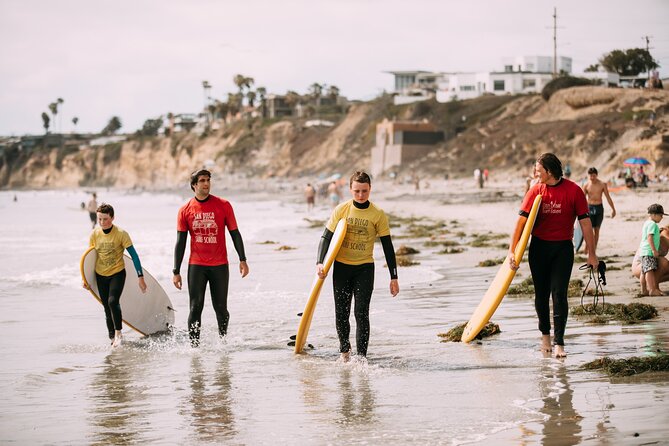
San Diego surf lessons can be chaotic. This one is built for fast, calm practice on a clean beach, with semi-private attention and real fundamentals. I like that you work on the basics that actually matter—pop-up, wave timing, and efficient paddling—and I like that instructors often tailor feedback right in the water, like Tanner helping first-timers ride waves and Tom getting beginners up quickly. One drawback to keep in mind: Pacific conditions can feel bigger than you expect, so you’ll want to listen closely if you’re truly brand-new.
The setup is straightforward and beginner-friendly in tone, but the ocean still decides the difficulty. You’ll get quality board and wetsuit rental, and you just show up with the simple stuff: a swimsuit, towel, water, and sunscreen. If you want a lesson that feels safe, structured, and personal without being overly formal, this style of class is a strong match.
In This Review
- Key Things to Know Before You Go
- 90 Minutes of Surf Progress in San Diego
- Meeting at 4850 Cass St: Starting Easy and Staying Organized
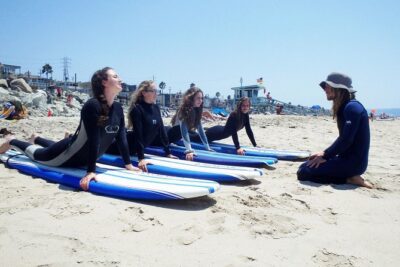
- What You Do on the Beach: Pop-Up and Timing Without the Guesswork
- Into the Water: How Semi-Private Coaching Changes Everything
- Gear: Surfboard and Wetsuit Rental Included
- How to Think About the Price (and Why It’s Not Just Paying to Paddle)
- Who This Surf Lesson Fits Best
- Weather and What to Do If the Ocean Won’t Cooperate
- Should You Book This Semi-Private Surf Lesson?
- FAQ
- How long is the surf lesson?
- Where is the meeting point?
- Does the lesson include just my group?
- What surf equipment is included?
- What should I bring?
- What language is the lesson offered in?
- Is the experience dependent on weather?
- What is the cancellation policy?
- Are service animals allowed?
Key Things to Know Before You Go
- Semi-private, your group only: you’re not packed into a giant class.
- Fundamentals taught in sequence: pop-up, paddling efficiency, and wave timing.
- Quality board and wetsuit included: less hassle, cleaner gear, fewer extra costs.
- Clean, calm beach conditions are the goal: easier learning environment.
- Instructors lead with patience and encouragement: lots of confidence-building coaching.
- La Jolla is often cited as a strong learning area: good place to test the sport.
Still learning to surf? More lessons at La Jolla and Pacific Beach
- Group Surf Lesson
★ 5.0 · 14 reviews - Private Surf Lesson
★ 5.0 · 13 reviews - San Diego: Private Group Surf Lesson
★ 5.0 · 5 reviews - eFoil Experience & Video Package. 2-Hours LIFT5 / LIFTX Session
★ 5.0 · 4 reviews
90 Minutes of Surf Progress in San Diego
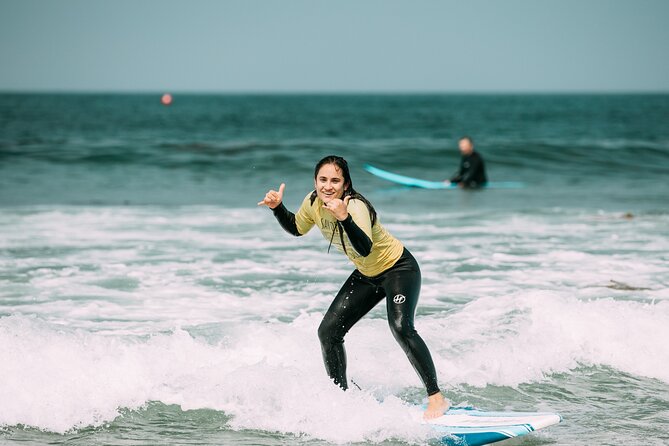
A good first surf lesson should do two things: teach you what to do, and give you enough water time to actually try it. This semi-private session is designed around that exact idea. You’re not just getting a demo and going home. The goal is to help you move from standing on a board like it’s a magic trick to understanding how waves connect with your feet, your arms, and your timing.
At the heart of the lesson are three fundamentals: the pop-up (getting to your stance fast), wave timing (knowing when to commit), and paddling efficiently (using your arms to get into position instead of burning energy). That’s the core loop that turns surfing from random effort into a repeatable skill. Once you get that loop, even if you don’t ride a long wave, you still leave with real technique you can build on later.
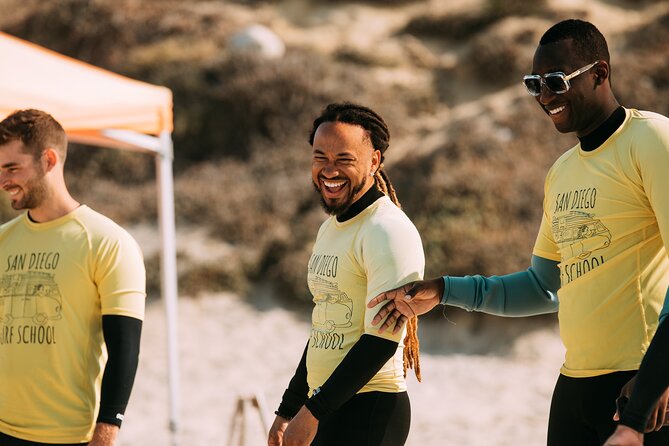
You’re also getting coaching that’s meant to stay personal. Semi-private doesn’t mean you’re alone, but it does mean you’re more likely to get direct corrections and clear feedback. Instructors like Tanner, Cody, Ken, Tom, and Brooks have been specifically praised for patience and encouragement, and you can feel why that matters on the first day when fear is part of the process.
Meeting at 4850 Cass St: Starting Easy and Staying Organized
The lesson meets at 4850 Cass St, San Diego, CA 92109, and it ends back at the meeting point. That matters more than it sounds. When you’re learning something physical and weather-dependent, a simple start/end location keeps you from wasting energy on logistics.
You’ll want to arrive ready to move quickly. Surf lessons work best when you’re not trying to change in a hurry or scramble for sunscreen right as the group is forming. The activity setup is organized enough that beginners can get comfortable fast, which lines up with how many first-time surfers describe the pace.
This is also offered in English, and it runs as a small, private-style experience where only your group participates. That reduces confusion, helps instructors tailor directions, and keeps the flow from stalling.
If you care about transit, it’s noted as near public transportation, which is handy if you’re not renting a car. The big win here is time: you spend more of the 90 minutes actually learning the ocean rhythm, not waiting around.
What You Do on the Beach: Pop-Up and Timing Without the Guesswork
Before you’re far from shore, you’ll get instruction on the basic moves that decide whether you stand up or wipe out immediately. The lesson covers the pop-up, and it’s typically taught in a way that makes sense even if you’ve never done a push-up in your life. The trick is repetition with feedback: you practice getting into position so the ocean doesn’t catch you while you’re still thinking.
Then comes wave timing. Timing sounds abstract until someone shows you how to read what’s happening. You learn when to aim your board toward the right moment so you’re not paddling after the wave has already passed. This is one reason why patience from your instructor matters. If you’re nervous, timing gets worse; if you’re calm and listening, timing gets better quickly.
The third fundamental is efficient paddling. This is the one people underestimate because it looks simple. In reality, paddling is the engine. If you paddle too weakly, you’ll miss waves. If you paddle too hard, you’ll gas out before your best attempts. Efficient paddling is how you stay in the learning window longer.
A big theme from instructors’ teaching styles is confidence. One lesson highlighted how an instructor helped a beginner push past fear and gave skills and confidence to get going. That mental piece matters because the ocean doesn’t care how well you watched instruction. You still have to attempt the move.
Into the Water: How Semi-Private Coaching Changes Everything
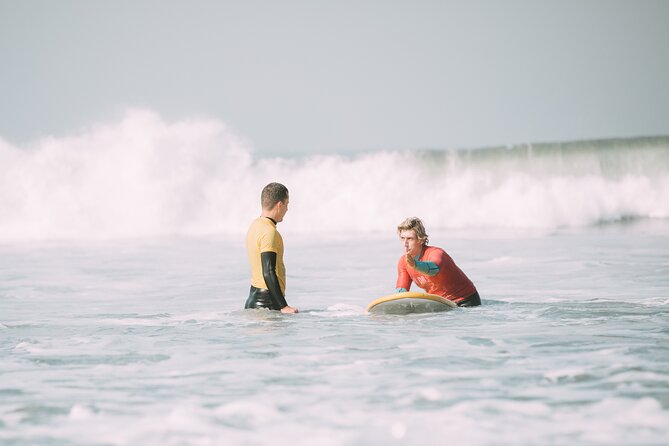
Once you’re in the water, this stops being a lecture and becomes real practice. Semi-private lessons work best when the instructor can watch you closely and correct the small things. The ocean amplifies mistakes fast. If your pop-up is late or your board is angled wrong, you’ll feel it immediately.
That’s why semi-private can be a real advantage for families, teens, and groups of friends. Instead of waiting your turn, you usually get more chances to try. And when you do fall, you’re not just guessing why. You can get quick cues that help you fix the next attempt.
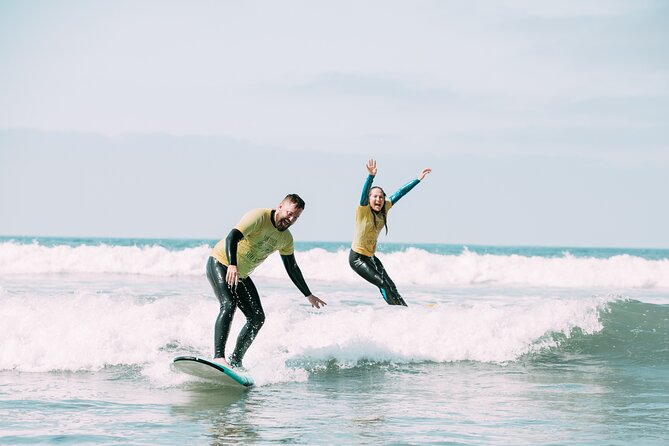
Instructors have been praised for getting people up quickly, including a case where an instructor helped two sons get up in about 30 minutes. Another coaching style was described as patient and encouraging, which is exactly what you want if your first sessions include a few scary moments. And there’s at least one story where Tanner helped two first-time surfers get on waves described as gnarly, which tells you the instructors don’t just keep you safe on tiny water—they help you progress within the conditions.
If you’re a true beginner, don’t assume the waves will be tiny just because the lesson is beginner-focused. One note worth respecting: Pacific coast waves can feel bigger than you expected. That doesn’t mean this lesson is wrong for beginners—it means you should be ready to adjust your expectations and follow your instructor’s call on which waves to try.
Other workshops we have tried across San Diego
- Onewheel Electric Hoverboard Lesson and Bay Ride★ 5.0 · 98 reviews
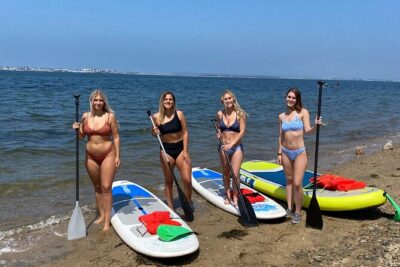
- Stand up Paddle Board Lesson on The San Diego Bay★ 5.0 · 25 reviews
- Intro to Wild Clay/Earthenware Pottery Workshop★ 5.0 · 10 reviews
Gear: Surfboard and Wetsuit Rental Included
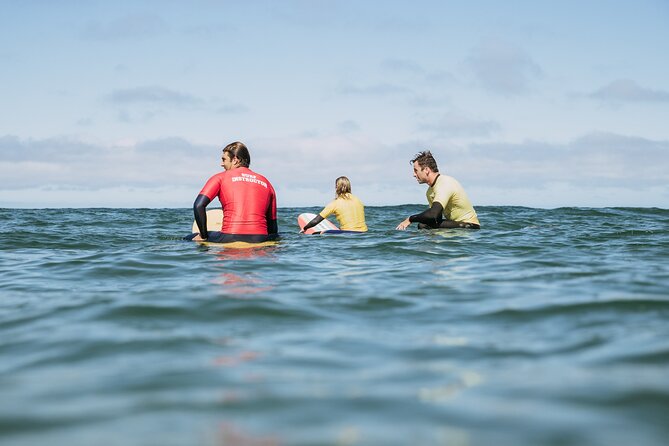
You’re not on your own for equipment. The lesson includes a surfboard and wetsuit rental, and that’s one of the strongest value parts of the whole experience.
Surfing has a gear learning curve. Boards differ in stability, thickness, and shape. Wetsuits affect comfort and body heat, which affects how long you can stay focused. When the equipment is included, you don’t waste money on rentals that might not fit your needs, and you don’t spend your arrival time figuring out sizing.
The other thing I like: you know the gear is meant for this specific instruction setting. Clean equipment and “well organized and safe” is exactly the kind of detail you want from a surf school because it affects confidence. On a first lesson, confidence is half the workout.
What you do need to bring is simple:
- a swimsuit
- a towel
- water
- sunscreen
That’s it. No extra shopping spree, no surprise rental desk stress.
How to Think About the Price (and Why It’s Not Just Paying to Paddle)
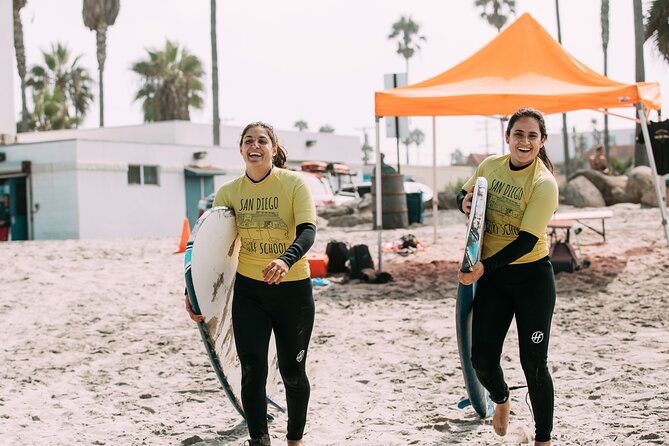
At $125.28 per person for about 90 minutes, this isn’t the cheapest way to touch the ocean—but it also isn’t priced like a private one-on-one coaching session. The value is in the combination: instruction time plus included board and wetsuit rental.
Here’s how I’d frame the economics: if you had to buy or rent a board and wetsuit separately, and then pay for generic lesson instruction, you’d likely spend more. This package simplifies the day. You’re also paying for human coaching, not just equipment access. Surf progress is slow if you’re self-teaching from scratch, and a structured instructor shortens that learning curve.
Also, the group style matters. Semi-private helps keep attention more focused, especially for beginners and teens who need clear, repeatable coaching. If you’re a family or friends group, it can feel like better use of money compared to piecing together multiple individual rentals and lessons.
Bottom line: this is best value when you show up ready to learn, listen, and try. If you’re expecting a casual float and photos, you might feel the time pressure. If you want skill-building and confidence, the price tracks well.
Who This Surf Lesson Fits Best
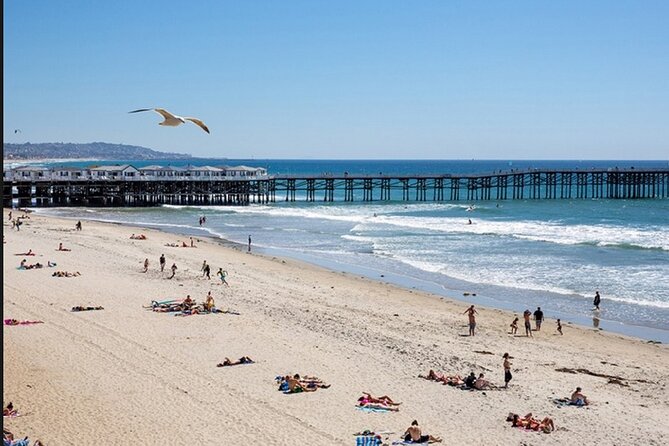
This lesson is a good fit when you fall into one of these buckets:
First-timers and returning beginners. The course is built around fundamentals, and the repeated praise for patience and fast progress makes it a solid choice when you’re nervous but determined.
Families. The teaching style described for young surfers suggests it’s friendly to parents who want their kids to enjoy learning and still feel safe.
Teens and friend groups. Semi-private keeps the energy fun but still structured. People have mentioned that it was a must-do for teens, and that makes sense because teens often learn quickly when the instructor is encouraging and the pacing stays active.
If you’re extremely beginner and terrified of the water, prioritize instructors who emphasize encouragement, because confidence changes everything. One account specifically described an instructor helping a beginner get past initial fear and build skills to get going. That’s what you want.
And one quick reality check: Pacific surf can be bigger than expected. So even if you’re a beginner, mentally prepare for the ocean to set the difficulty. The lesson being on a clean, calm beach is a big help, but conditions still vary.
Weather and What to Do If the Ocean Won’t Cooperate
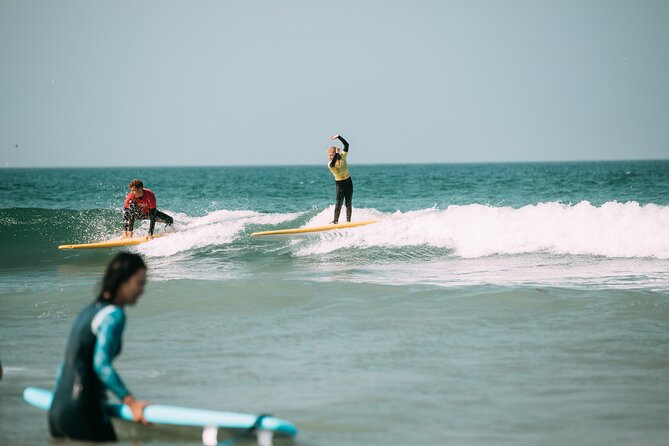
This experience requires good weather. If it gets canceled due to poor weather, you’ll be offered a different date or a full refund. That’s the right kind of policy for a surf lesson, because wind, swell, and timing can completely change what’s safe and teachable.
So I’d plan like you mean it: have some flexibility. If you’re in town for only one day, you’re taking a bigger gamble. If you can pick a couple dates, you’re increasing your odds of actually getting into the waves.
When the weather is solid, the structure holds. You’ll still get the sequence: fundamentals on the beach, then time in the water practicing pop-up and timing with instructor help.
Should You Book This Semi-Private Surf Lesson?
Book it if you want a structured start to surfing with personal coaching, included gear, and a realistic shot at making progress in 90 minutes. The strongest reasons to say yes are the fundamentals-focused teaching, the small-group feel where your instructor can actually watch you, and the stories of patient support that turns fear into action.
Skip or reconsider if you’re expecting a purely casual experience, or if you’re only interested in super tiny waves. Even on calm learning beaches, the ocean can still surprise you, and some beginners get a reality check about how much bigger Pacific surf can feel than they pictured.
If you’re choosing between a generic rental-only day and a lesson, pick the lesson. That’s the difference between standing on a board by accident and leaving with technique you can use again.
FAQ
How long is the surf lesson?
The lesson runs for about 1 hour 30 minutes.
Where is the meeting point?
The meeting point is 4850 Cass St, San Diego, CA 92109, USA.
Does the lesson include just my group?
Yes. This activity is private, meaning only your group participates.
What surf equipment is included?
A quality surfboard and wetsuit rental are included with the lesson.
What should I bring?
Bring a swimsuit, a towel, some water, and sunscreen.
What language is the lesson offered in?
The lesson is offered in English.
Is the experience dependent on weather?
Yes. The activity requires good weather, and you may be offered another date or a full refund if it’s canceled due to poor weather.
What is the cancellation policy?
Free cancellation is available. You can cancel up to 24 hours in advance for a full refund.
Are service animals allowed?
Yes, service animals are allowed.
More Private Drivers Near Balboa Park



From Coronado to La Jolla: More Workshops
More Surf Lessons on the San Diego Coast
Just added: fresh San Diego tours worth a scroll






San Diego Surf Lessons, compared.
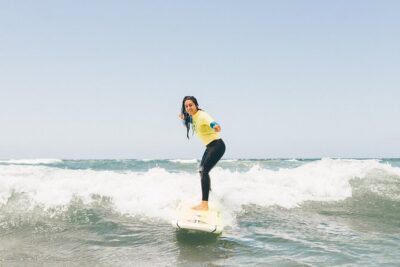 ★ 5.0Learn to Surf in La JollaFrom $11956 reviews
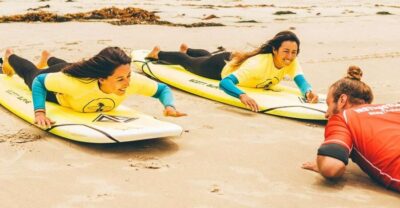 ★ 4.9La Jolla: 1.5-Hour Surfing LessonFrom $13941 reviews
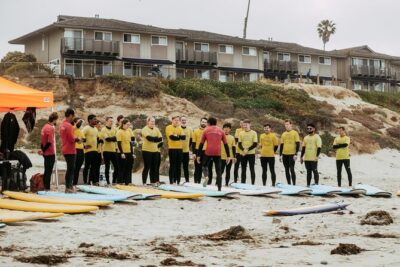 ★ 5.0Group Surf LessonFrom $11314 reviews
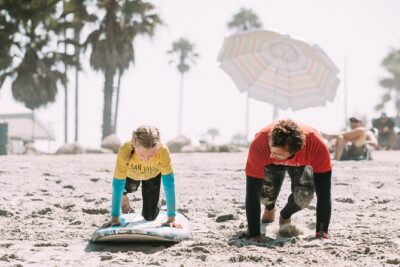 ★ 5.0Private Surf LessonFrom $16213 reviews
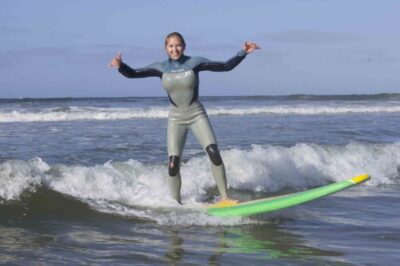 ★ 5.0Private Group Surf LessonFrom $2895 reviews
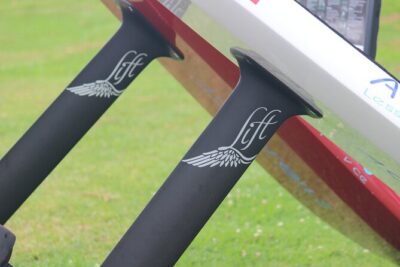 ★ 5.0eFoil Experience & Video Package. 2-Hours LIFT5 / LIFTX SessionFrom $3454 reviews
 ★ 5.02 Hour Private Group Surf Lesson in La Jolla3 reviews
Browse the lists this tour appears in